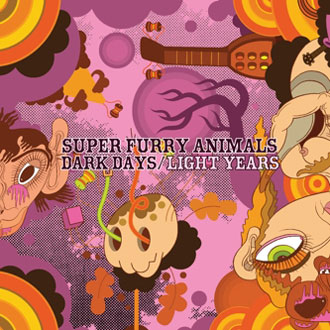
Music: Super Furry Animals: Dark Days/Light Years
Casey McKinney05.04.10
Welshmen Super Furry Animals never cease to delight. They first had me with an infectious ode to Bill Clinton and Monica Lewinsky in Rings Around The…

When Disco Was the Soundtrack to Martial Law: David Byrne, Fatboy Slim and Imelda Marcos
Luis H. Francia05.04.10
During the 1970s, disco was wildly popular in the Philipines. Imelda Marcos had a dance floor complete with mirror ball built on the roof of the presidential palace and when visiting New York made appearances at Studio 54. Fittingly David Byrne’s double album musical biography of Imelda is backed by the clubby beats of Norman Cook/Fatboy Slim. While Luis Francia finds much to like in the music, he asks whether the project called for a darker edge. Is Here Lies Love an epitaph for Imelda’s tombstone or for those of the unknown numbers killed by the Marcos regime?
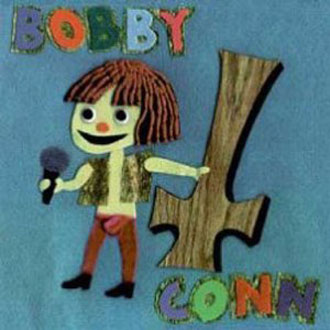
Music: Bobby Conn
Casey McKinney04.30.10
So I keep harping on ‘old news’ here in some music recommends… hell Jack Hanley keeps putting Grateful Dead videos up still on Facebook so… and…
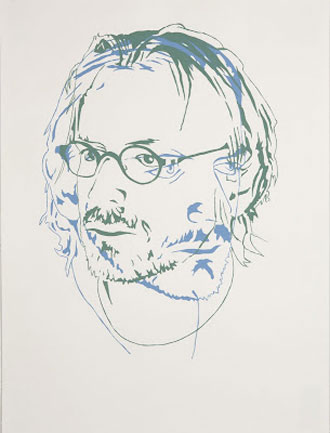
Art: Jesse Bransford : The Jungle (for Norma), works on paper
Casey McKinney04.30.10
Am stoked about this show. Two favorite persons and artists, Jesse Bransford and Karsten Krejcarek, made a journey together to the jungles of Peru…

And Now for Something Less Funky: A Fan in Search of Joanna Newsom’s Elusive New Epic
Brian Howe04.23.10
Brian Howe finds Joanna Newsom’s latest, expansive offering most generous and yet somewhat unusual to digest. In fact, Howe believes her two-plus hour and three-disc album may not be completely digestible at all. That’s not to say Newsom isn’t providing tasty musical numbers to gorge upon. Rather, sometimes one’s final say may require a readjustment that only a personal viewing can do.

One, Two, Three and Four: Bad Nature, or the Literary Universe of Javier Marias
Eli S. Evans04.21.10
The politics of telling usually don’t vary much from the school yard through adulthood; the semantics and subtleties are among the few tacit principles in life that remain static. Here, Eli Evans explores the dangers, repercussions, and motivations of the urge to tell in some of the works of Javier Marías, from the diminutive Bad Nature, or With Elvis in Mexico to the Proustian Your Face Tomorrow and finds the similarities striking, the characters’ predicaments, their impulses to tell their stories, which in more than one way reveals their methods for escaping an unexpected death in a foreign country, and ultimately their own survival.
Knowing Me, Knowing You, Knowing Them: Fiction Across Borders
Louis Chude-Sokei04.19.10
Are "discursive domination" and "representational violence" the colonial impulse in fiction or the very nature of literature itself? Is there an ethical way for writers to represent people who are racially, sexually, culturally different or should writers even be concerned with being ethical in the first place? In his review of Shameem Black’s Fiction Across Borders, Louis Chude-Sokei, author of The Last Darky, looks at how we look at fiction about the "other." Along the way he takes blandly utopian multiculturalism to task and examines how disdain and cross-cultural respect have come to seem interchangeable.
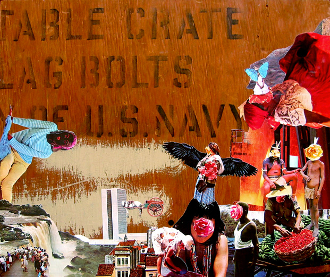
Accompanying images are courtesy of Berlin-based artist Paul Tyree-Francis.
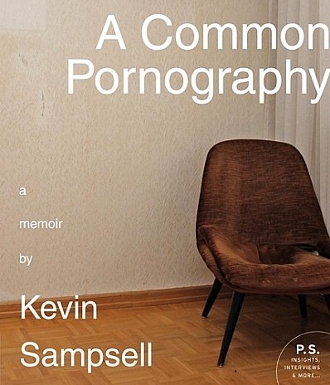
Sex and Micro Prose: A Common Pornography by Kevin Sampsell and Man’s Companions by Joanna Ruocco
Trinie Dalton04.14.10
Kevin Sampsell, a longtime indie press stalwart with his Portland-based Future Tense Press, is also the author of A Common Pornography, a memoir about sex and family told largely in small segments. Joanna Ruocco’s writing has received praise from Brian Evenson, Robert Coover and Carole Maso. Her second book Man’s Companions is a collection of very short stories. Trinie Dalton, no stranger to the world of short prose, reviews these two new works.
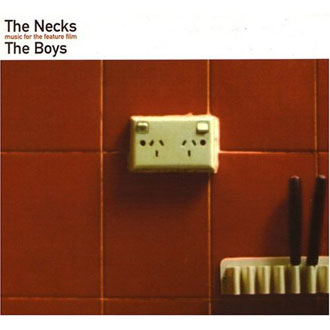
Music: The Necks: The Boys
Casey McKinney04.07.10
Okay (don’t ask why, well you can but) forgot what I’ve hastily said times before about no belief in genius – that it’s all just masked…

Bong Joon-ho’s Mother
Michael Busk04.07.10
Influenced by Hitchcock and David Lynch, Bong Joon-ho has made a series of films that blend horror, suspense and dark comedy to comment upon Korean society and human nature. In his latest, Mother, an older woman defends her developmentally disabled son when he is falsely accused of murder by a lazy and corrupt small town police force. Bong takes this seemingly feel-good premise and turns it into one of the most surprising and unsettling films in recent memory. His use of inventive cinematography often tricks the viewer’s eye, a fitting choice for a film that is in the end about our ability to deceive ourselves.
